

AI, Consumer Behavior
Is Your Property Visible in AI Search?

Is Your Property Visible in AI Search? Track These Metrics to Find Out
Visibility is no longer a score that lives exclusively in traffic reports and ranking tables.
Where users once turned to Google and Bing, they now go directly to AI systems like ChatGPT, Gemini, and Perplexity. Pages and pages of links have been replaced with clear, concise, and conversational answers.
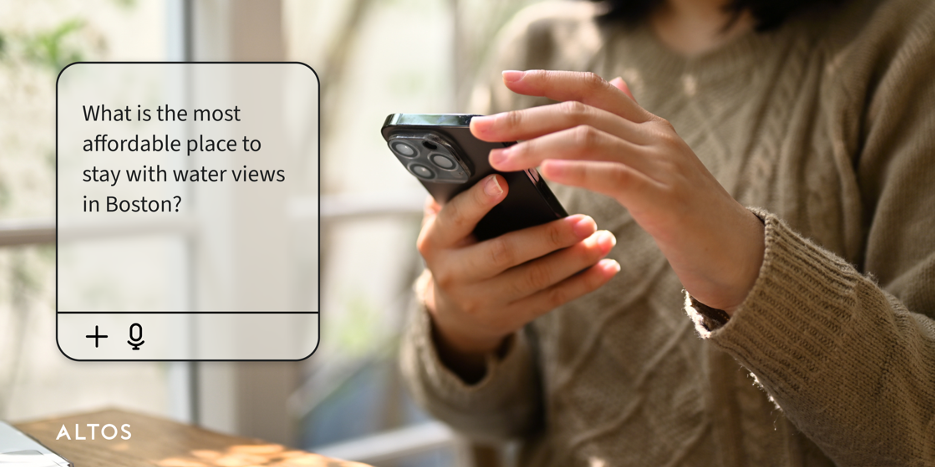
For hospitality and real estate brands, that shift is particularly important. Users aren’t plugging in keywords like “most affordable hotel in Boston.” They’re asking complete questions: “What is the most affordable place to stay with water views in Boston for these dates?”
A prospective buyer might go even further: “Which Caribbean destinations offer luxury residences with resort amenities, marina access, and direct flights from the East Coast?”
That means two crucial changes have taken place:
- Answers are discovered in different places.
- Answers are presented in different ways.
Traditional SEO strategies don’t account for these differences. In the age of AI, hospitality marketers need another layer of measurement: one that shows not only whether travelers can find you, but whether AI understands when and why your property belongs in the conversation. That also means trading traditional SEO benchmarks with the new metrics that really matter. Let’s break that data down.
Why Clicks Can’t Tell the Whole Story
If you’re wondering whether AI is already sending enormous amounts of referral traffic to hospitality websites, the short answer is: not yet.
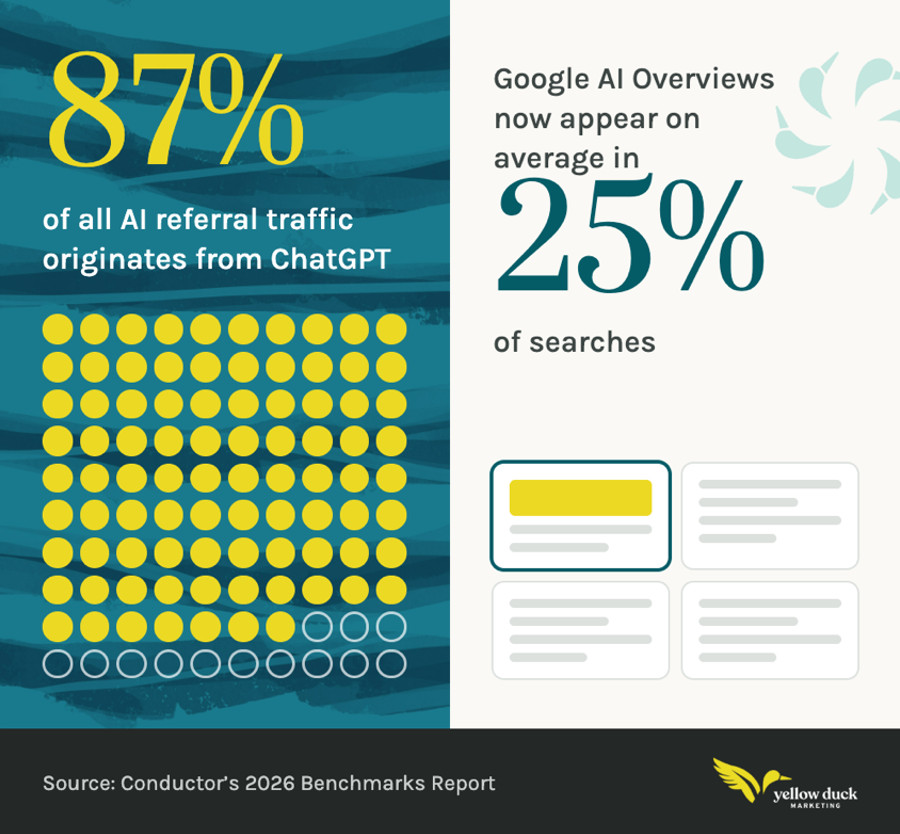
Conductor’s 2026 AEO/GEO Benchmarks Report found that AI referrals make up just over 1% of the average website’s traffic. But that doesn’t discount the importance of AI visibility. It just means we need to think about success a little differently and focus on the right engines.
Consider the traditional hotel discovery journey. A traveler might search for a destination, visit several hotel websites, compare amenities, read reviews, and eventually book. Website traffic captures a meaningful part of that journey.
Now imagine that traveler asks an AI platform to narrow 30 possible hotels down to five that match their exact criteria before visiting a single property website.
The hotel may have influenced the decision even before earning the click.
For luxury real estate, where research and consideration periods can be significantly longer, that distinction becomes even more important. A prospective buyer researching second-home destinations, branded residences, resort communities, or investment opportunities may interact with AI-generated information repeatedly before ever submitting an inquiry.
Success in AI search, then, isn’t measured solely by referral traffic, but by whether your brand is present at the moment AI generates an answer.
Quantifying Visibility: The AI Metrics That Actually Matter
To measure impact in an AI-centric discovery landscape, hospitality teams must shift from classic metrics like impressions and position to the following indicators. These metrics form a comprehensive picture of AI visibility performance that can guide optimization decisions more precisely than traditional KPIs.
Together, these metrics help answer questions that matter specifically to hotels, resorts, destinations, and luxury residential properties. The most critical question among them: how is AI presenting your brand now?
- Does AI understand what differentiates our property?
- Does it accurately describe our amenities, location, and experience?
- Do we appear when travelers search by need or occasion rather than by brand name?
- Are competing properties appearing in conversations where we are absent?
- Are we being associated with the audiences and experiences we actually want to attract?
Use these key datapoints to track how your brand is perceived, referenced, and recommended across AI channels.
AI Presence and Citation Frequency
Measures how often your brand is referenced within AI responses. This is now considered a foundation metric because it shows whether AI systems actually include your brand in answers.
Prompt Coverage Rate
Calculates the percentage of high-intent queries where your brand appears. In fact, filling gaps here reveals opportunities to address unrepresented intent.
AI Share of Voice
Compares brand mentions against competitors across AI responses. This reveals competitive visibility performance, not just absolute appearance counts.
Context and Sentiment Quality
Evaluates how AI describes your brand on a scale: recommended, neutral, or weak. AI systems not only mention brands but also characterize them, with the understanding that characterization reveals perception and relevancy signals.
Model-Level Visibility
Different AI platforms cite your content at different rates. Tracking across ChatGPT, Gemini, Perplexity, and AI Overviews give a full picture of discovery channels.
Velocity and Trend Metrics
Tracks how visibility evolves over time rather than static snapshots. Growth or decline shows whether strategies are working or stagnating.
How AI Visibility Data Drives Strategic Hospitality Decisions
Once you understand the significance of these metrics, the next step is turning them into action:
- Content Strategy Refinement: Identify gaps where your brand is not present in relevant AI responses.
- Prompt-Focused Content Creation: Create or restructure content to target specific natural language queries AI users are asking.
- Competitive Advantage Identification: Use share of voice comparison to uncover where competitors dominate and where you can exploit weaknesses.
- Entity Optimization: Strengthen signals that help AI recognize and trust your brand.
Find Your Benchmarks with an AI Visibility Audit
An important first step in moving beyond old-school tactics and prioritizing these core AI visibility metrics: understanding how AI sees your property now.
An AI Visibility Audit gives you a clear, data-backed view of how a hotel, resort, destination, or real estate brand performs across AI search and answer engines. It examines whether your content appears in response to prompts, how it appears, and how frequently.
A successful audit should provide insights on:
- Prompt Mapping: Identifying the natural-language questions travelers or prospective buyers ask AI systems throughout the discovery and consideration process.
- Engine Sampling: Analyzing visibility across multiple AI platforms rather than relying on a single search experience.
- Citation Tracking: Measuring how often your property or content is referenced and which sources AI systems use to understand it.
- Competitive Benchmarking: Comparing visibility with relevant hotels, resorts, developments, and destinations.
- Entity Signal Assessment: Evaluating whether AI clearly recognizes your property, its defining attributes, and its relationship to the broader brand and destination.
Solutions like our partner Altos’ EO+ AI Visibility Audit arm brands with these insights, plus a visibility score, a readiness profile, and a prioritized roadmap for improving how AI systems discover, trust, and recommend you. The brands that chase and embrace this level of insight will be the ones AI systems learn to trust.
For hotels and luxury real estate properties, that roadmap can translate a new and sometimes abstract channel into practical marketing decisions: what information needs to be clearer, what questions remain unanswered, which experiences deserve greater emphasis, and where competitors currently occupy conversations your property could credibly join.
With experience supporting hospitality and luxury real estate brands, our partners at Altos approaches AI visibility through the lens of how travelers and prospective buyers actually discover, compare, and evaluate properties. That industry context helps ensure an audit focuses on the questions and decisions that matter throughout the customer journey.
Give AI What It Needs to Recommend Your Property
In the AI era, the question is no longer “Do we rank?”
It’s: “When a traveler describes exactly what they’re looking for, are we part of the answer?”
A traveler may never ask an AI platform for your hotel by name. A prospective buyer may not know your development exists. Instead, they describe the vacation, experience, property, or lifestyle they have in mind and ask AI to help narrow the field.
Visibility in that environment is not about being found on a list. It’s about giving AI systems enough clear, authoritative, and relevant information to understand when your property belongs in the conversation.
The brands that measure that visibility now will have a clearer picture of where they stand—and what they need to do next. Contact Yellow Duck or Altos Agency to dive deeper!
Credit: Kathy Sevigny, CEO at Altos