


Market Research, Web Design
GEO vs SEO: Why Your Content Needs to Impress AI Now
April 30, 2026

Your SEO strategy is still working. But it’s only half the battle anymore.
For years, ranking on Google’s first page meant traffic. Now? People are asking ChatGPT, Gemini and Claude questions instead, and your content might not even show up in the answer. Meanwhile, your competitors are already shifting their strategy. If you want to stay visible in search, you need to optimize for both SEO and GEO. Here’s why, and how to do it.
The Search Landscape Has Changed
The numbers tell the story. AI-powered chatbots captured 5.6 percent of U.S. desktop search traffic as of mid-2025, more than double the share from a year earlier and quadruple that of January 2024. Among early adopters, that share reached 40 percent.
The adoption trajectory isn’t slowing. The number of U.S. adults using generative AI as their primary search tool is projected to grow from 13 million in 2023 to over 90 million by 2027. AI-referred sessions jumped 527 percent year-over-year in the first five months of 2025 alone, and we’re seeing more leads come from AI sources.
Among younger audiences, the shift is even more pronounced. Approximately 31 percent of Gen Z respondents say they begin searches using AI platforms or chatbots, compared to roughly 20 percent of the general population. A 2025 Gallup survey found that 79 percent of Gen Z have used AI tools overall, with nearly half using generative AI weekly.
But here’s what matters more: the way people find answers is fragmenting. They’re not choosing one search method. They’re using Google, then asking Claude, then checking Perplexity. Your content either shows up across all three, or it’s invisible to a growing share of your potential audience.
The catch? Each method prioritizes different types of content.
What Is GEO?
GEO stands for Generative Engine Optimization. It’s the practice of optimizing your content so it gets cited and referenced within AI-generated answers on platforms like ChatGPT, Google AI Overviews, Perplexity and Claude.
Here’s the practical difference: With traditional SEO, you’re fighting for positions one through 10 on Google. A user sees your headline, clicks your link and lands on your page. Success = clicks. With GEO, a user asks an AI a question. The AI pulls from dozens of sources, synthesizes an answer and your content gets woven into that response. The user sees your insights, your data and your perspective, but they might never click your link. Success = being cited.
The thing is, they’re not competing strategies. A piece of content that performs well for GEO almost always performs well for SEO too. But the reverse isn’t always true. A thin, keyword-optimized post might rank on Google but never get cited by AI. That’s the gap you need to close.
SEO vs. GEO: Head-to-Head
Goal
- SEO: Rank in search results
- GEO: Get cited in AI answers
Ranking Factor
- SEO: Keywords, backlinks, domain authority
- GEO: Depth, accuracy, expertise, comprehensiveness
Thin Content Viability
- SEO: Can work with the right signals
- GEO: Rarely gets cited
Update Frequency
- SEO: Older content can rank indefinitely
- GEO: 50% of cited content is less than 13 weeks old
What Success Looks Like
- SEO: Clickthrough = success
- GEO: Direct quotation/paraphrase = success
Expertise Signal
- SEO: Backlinks, domain age
- GEO: Original research, specific examples, data
The key insight: SEO rewards authority signals (external votes). GEO rewards actual authority (internal proof).

How AI Actually Decides What to Cite
AI systems were trained on massive amounts of web data. They learned patterns about which sources are reliable, comprehensive and worth repeating. They’re not gaming a ranking algorithm — they’re evaluating whether your content answers the question well.
Research from Princeton, Georgia Tech and The Allen Institute of AI found that including citations, statistics and quotations from relevant sources can boost AI visibility by over 40 percent. Here’s what else gets cited:
- Comprehensive, Specific Answers
AI pulls from content that goes deep. Not “10 ways to improve your website,” but “Here’s why your conversion rate is low, specific metrics to measure it and three tested approaches with real results.”
When you answer a question, ask yourself: What would an expert say that a generalist wouldn’t? What context is missing from other answers out there? That’s what AI values.
Example: Instead of “SEO takes time,” say: “Most websites see meaningful traffic improvements 3-6 months after launching an SEO strategy, but initial keyword rankings can appear within 4-8 weeks if you’re targeting lower-competition terms. Here’s why the gap exists …”
- Clear, Demonstrated Expertise
Your content should prove you know what you’re talking about. That means:
- Original research or data — Run a survey, analyze trends, pull your own numbers
- Case studies — Show what worked and what didn’t, with specifics
- Hands-on examples — Don’t just explain a concept; walk through how you’d actually apply it
- Transparent limitations — Admit what you don’t know and why (this increases credibility with AI systems)
LLMs are 28-40 percent more likely to cite content with clear formatting: hierarchical headings, bullet points, numbered lists and tables. Structure signals expertise.
- Clean, Logical Structure
AI reads and parses your content structure. If you make it easy for an AI to extract the answer — clear headings, short paragraphs, bullet points where they belong — it’s more likely to cite you. Messy structure suggests messy thinking. Clean structure suggests you know your stuff.
FAQs are among the most cited content formats in generative engines because they answer specific questions directly, which matches how users query AI platforms. Consider adding a FAQ section to your high-value posts.
- Accuracy and Freshness
This means:
- Refresh your content regularly, especially for fast-moving topics
- Fact-check obsessively before publishing
- Date your posts and update them visibly when information changes
- Originality
Duplicate content gets ignored. AI will cite the original source, not your rewrite. Research found that 32.5 percent of AI citations come from comparison articles — original analysis and head-to-head comparisons are high-citation formats. If you’re pulling ideas from five other blogs, you won’t get cited. Bring something new to the table.
What Doesn’t Work (and Actively Hurts You)
- Thin Content: A 500-word post that skims the surface won’t get cited, no matter how well it ranks on Google. AI systems recognize depth. If your answer is too shallow, it gets passed over.
- Keyword Stuffing: It doesn’t fool AI. It makes your content worse for both humans and machines.
- Paywalls: If AI can’t access your content, it can’t cite it. This is a hard wall — consider whether paywalling every post makes sense.
- Misleading Claims: AI learns from patterns. If you overstate results, make unsubstantiated claims or mislead, your credibility erodes over time.
- Duplicate Content: Publishing the same answer five different ways dilutes your authority. Consolidate and go deep instead.
The Practical Path Forward
Here’s how to optimize for both SEO and GEO:
Step 1: Audit Your Existing Content
Go through your top 20 posts by traffic or importance. Ask:
- Could this go deeper without becoming overwhelming?
- Am I adding original insights or just rewriting what’s already out there?
- Does the structure make it easy for an AI to extract the answer?
- Is this still accurate? When was it last updated?
Step 2: Identify Gaps
Where are people asking questions that your content doesn’t answer? Use:
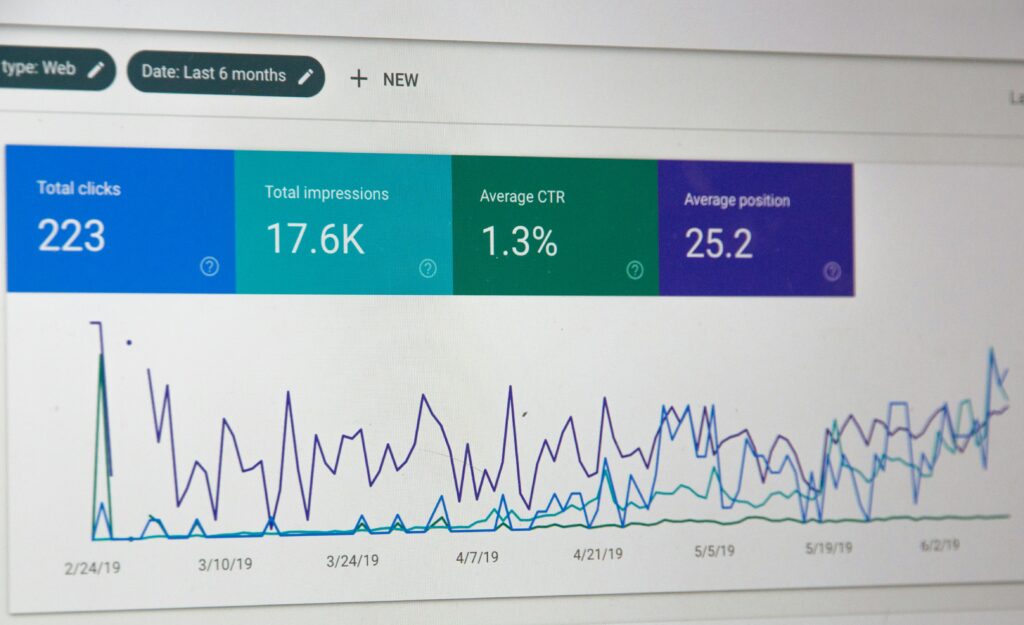
- Google Search Console — what queries bring you traffic, but where are you ranking 5-20?
- AI tools themselves — ask ChatGPT, Perplexity, Claude your target questions and see what they cite
- Reddit, forums, customer support tickets — real questions real people ask
Step 3: Go Deeper on High-Value Topics
Pick 3-5 posts that could impact your business. Expand them. Add:
- Original data or research
- Specific case studies
- Step-by-step walkthroughs
- Real numbers and timelines
- What doesn’t work and why
Step 4: Optimize for Structure, Not Just Keywords
Use headings, subheadings and short paragraphs. Break up long blocks of text. Use bullet points and tables where appropriate. Add a FAQ section at the end of informational posts. Content with proper schema markup shows 30-40 percent higher visibility in AI-generated answers, worth implementing on your most important pages.
Step 5: Update and Refresh Regularly
Set a schedule to revisit your top content quarterly. Refresh dates, check facts, add new examples. AI systems actively reward freshness.
Frequently Asked Questions About GEO
Q: Does GEO replace SEO?
A: No. Traditional SEO still matters enormously — Google sends 345x more traffic than all AI platforms combined as of late 2025. GEO is an additional layer, not a replacement. Think of it as “SEO plus.”
Q: Will being cited by AI actually drive traffic?
A: Yes, and more than you might expect. When brands are cited inside AI-generated answers, they see a 38 percent lift in organic clicks and a 39 percent increase in paid ad clicks. Being cited builds authority that compounds over time.
Q: How quickly can I get cited by AI?
A: Initial AI visibility can appear within two to four weeks — faster than traditional SEO’s three- to six-month timeline. But building sustained citation authority takes longer.
Q: What content format gets cited most?
A: Video is the single most cited content format across every vertical, with YouTube accounting for nearly a quarter of all AI citations. For written content, FAQs and comparison articles consistently perform well.
The Bottom Line
GEO isn’t about gaming a new system. It’s about creating genuinely excellent content that serves humans first. The content that gets cited by AI looks a lot like the content that ranks well on Google: comprehensive, authoritative, well-structured and accurate. The difference is in the depth. GEO punishes thin answers more aggressively than Google does.
So, here’s the strategy: Write for humans who need real answers, not for algorithms. Make your content so useful, so specific and so original that AI systems can’t help but cite it. Do that, and your SEO rankings will follow.
The future of search isn’t dominated by one engine anymore. It’s diversified across Google, ChatGPT, Perplexity, Claude and tools we haven’t seen yet. Getting found on Google still matters enormously. But getting cited by AI? That’s the frontier separating the visible from the invisible.
Want to audit your website content for GEO potential? Reach out to us! We help organizations and brands prepare their websites for the full search landscape.
Sources
- PYMNTS — AI chatbots capturing 5.6% of U.S. desktop search traffic, mid-2025 https://pymnts.com/news/artificial-intelligence/2025/consumers-use-ai-chatbots-online-searches-brands-scramble-be-seen/
- Statista — U.S. generative AI primary search usage projected to reach 90 million users by 2027 https://www.statista.com/statistics/1454204/united-states-generative-ai-primary-usage-online-search/
- Frase.io — AI-referred sessions up 527% YoY in first five months of 2025; 50% of cited content is less than 13 weeks old https://www.frase.io/blog/what-is-generative-engine-optimization-geo
- ALM Corp — 31% of Gen Z begin searches with AI platforms https://almcorp.com/blog/ai-search-trends/
- Walton Family Foundation / Gallup — 79% of Gen Z have used AI tools; 47% use generative AI weekly (2025) https://www.waltonfamilyfoundation.org/about-us/newsroom/gen-z-is-using-ai-but-reports-gaps-in-school-and-workplace-support
- Princeton, Georgia Tech, The Allen Institute of AI — Citations, statistics, and quotations boost AI visibility by 40%+; 32.5% of AI citations come from comparison articles https://arxiv.org/html/2311.09735v3
- HubSpot — LLMs 28-40% more likely to cite well-formatted content; FAQs among most cited formats; YouTube accounts for ~25% of all AI citations https://blog.hubspot.com/marketing/generative-engine-optimization-statistics
- Dataslayer — AI platforms prefer content 25.7% fresher than traditionally cited content; schema markup improves AI visibility 30-40%; Google sends 345x more traffic than AI platforms combined; initial AI citations can appear in 2-4 weeks https://www.dataslayer.ai/blog/generative-engine-optimization-the-ai-search-guide
- Wellows / Relixir — Brands cited in AI answers see 38% lift in organic clicks and 39% increase in paid ad clicks https://wellows.com/blog/statistics/