

Social Media
Better Together: How Paid and Organic Social Work
September 17, 2026

Paid vs. Organic: which one is better and why? They are actually better together.
Paid and organic aren’t competitors for budget; they’re teammates with different jobs. Organic builds trust and community, while paid builds reach. Organic allows you to show up on someone’s feed, while paid confirms you’ll be on it. Neither one alone gets you the full picture – together they compound.
Think of it this way: your organic content is doing the talking, and your paid budget is making sure more people are actually in the room to hear it. When you treat the two as separate line items, you leave reach, data, and momentum on the table. When you treat them as one strategy, each channel makes the other stronger.
What Organic Does Best
- Shows your personality and brand voice
- Builds trust and lets you “sell” without actually selling
- Creates content you can test before you boost it
- Drives engagement signals (comments, shares, saves) that make paid perform better
- Brings brand awareness and keeps audiences engaged
What Paid Does Best
- Gets your best organic content in front of followers AND non-followers
- Targets specific audiences so they can take a desired action (buy, sign up, spend money, etc.)
- Delivers predictability that organic can’t
- Scales what’s already proven (when using high-engaging organic)
- Requires a clear objective and a way to measure success (paid only works when you’re optimizing for it)
Proof It Works: A Real Example
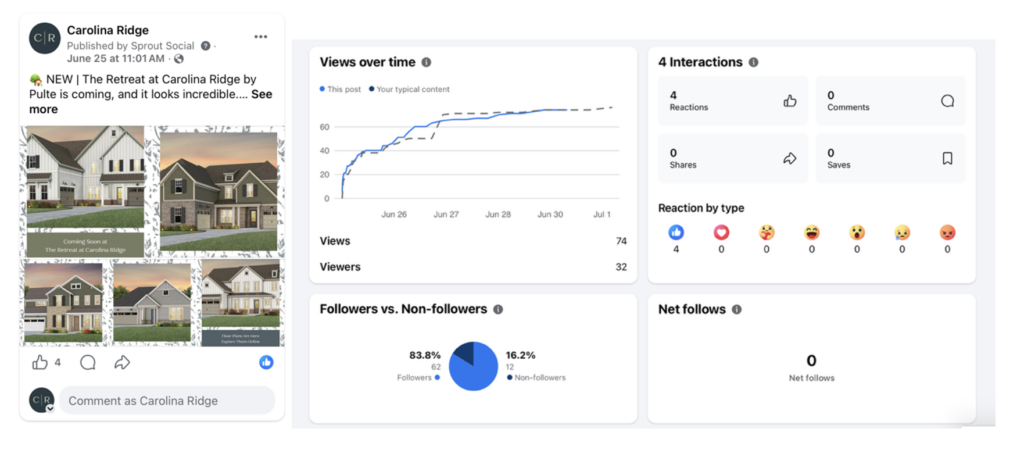
We saw this play out recently with one of our real estate community clients gearing up for a grand opening. Social media accounts were only a few months old so followership was still relatively low. Their non-boosted posts on Instagram and Facebook were averaging around 70 views and just 2-4 likes – solid content that simply wasn’t reaching enough people.
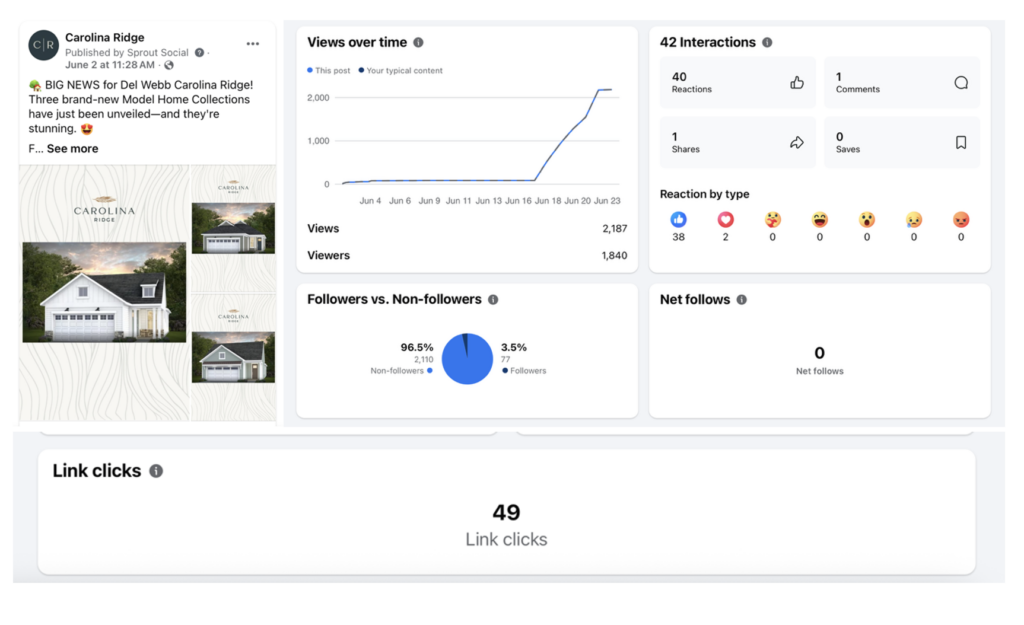
Once we boosted a handful of those same posts, each with $10 to $20, average views jumped to roughly 2,000, likes climbed to 12-38 per post and link clicks to the community website landed between 28 and 49. A modest daily boost on the page also helped it pick up 343 new followers over three months.
The organic content itself didn’t change – the photos, the voice, the message were identical. What changed was who got to see it. That’s the whole argument for pairing the two channels: organic gives you something worth boosting and paid makes sure it doesn’t stop at the followers you already have.
Not Boosted:
Boosted:
Why Using Both Works Best
- Use organic as your testing ground
- Boost your top-performing organic posts instead of guessing with new ad creative
- Follow up organic interest with paid intent
- Use paid data (what are people responding to) to inform your organic content calendar
At the end of the day, it’s not organic vs. paid; it’s organic and paid. Organic earns the trust. Paid makes sure the right people see it. Use them together, and you’re not just posting, you’re building a strategy. So, the next time you’re mapping out a campaign, skip the either-or question. Ask how organic and paid can back each other up instead and let the results from one channel sharpen what you do on the other.
Interested in developing a social media strategy for your business that enhances your posts’ reach and engagement? Reach out to us!