

Community Engagement, PR
Fans Remember Who Shows Up
What the Research Says About Athlete Community Work and Fan Loyalty
Stats fade. Rosters change. What a lot of fans hang on to is how an athlete showed up for the community.
There’s research behind this. Sport management researchers have been studying athletes’ community work for years, and the findings point the same way. When athletes put real time into their communities, fans trust them more and feel more connected to them. And that carries over to the teams and sponsors standing next to them.
Researchers call it Athlete Social Responsibility, or ASR. Think of it as the athlete version of corporate social responsibility. In practice, it looks like charitable foundations, youth camps, hospital visits, scholarships and steady support for a local cause.
Back in 2014, researchers Akiko Arai, Yong Jae Ko and Stephen Ross broke an athlete’s brand image into three parts:
- Athletic performance: what they do in the game
- Attractive appearance: how they look and carry themselves
- Marketable lifestyle: who they are off the field
Community work lives in that third bucket. It’s also the part that doesn’t depend on how the season is going.
What the studies found
Athletes with foundations earn more trust. University of Michigan researchers looked at 24 NBA players. Half had charitable foundations and half didn’t. After surveying 630 people, they found the players with foundations scored higher on familiarity, trustworthiness and sincerity. People were also more likely to tell others to buy tickets to see them play.
Giving back builds reputation and engagement. A study of 720 survey respondents measured ASR directly. It had a strong effect on an athlete’s reputation and on fan engagement. Both of those lifted the athlete’s brand image. And a stronger brand image made fans identify more closely with the athlete.
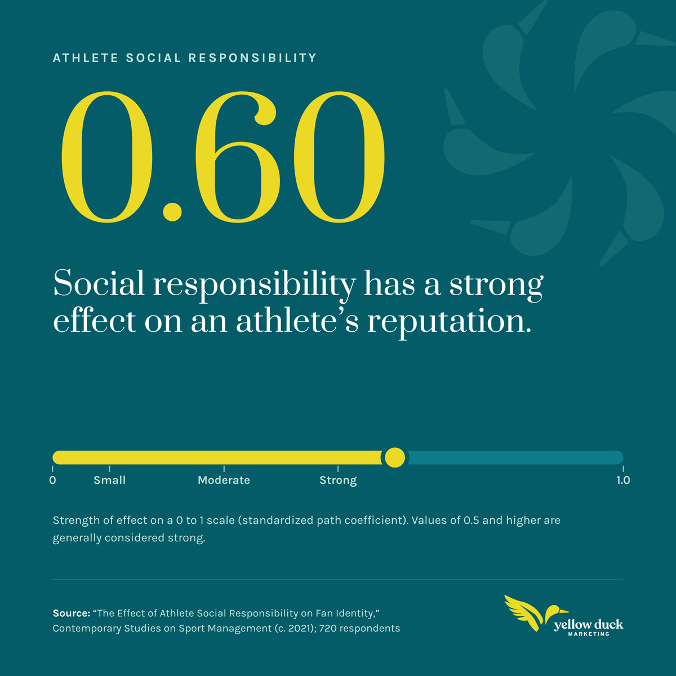
ASR had a strong effect on athlete reputation (0.60 on a 0 to 1 scale). Source: Contemporary Studies on Sport Management
Who you are off the field affects loyalty. In 2020, Mahmoudian and colleagues tested which parts of an athlete’s image drive fan loyalty. The off-field piece was one of three that did, along with performance and appearance. One of the things Carolina Panthers Quarterback Bryce Young’s teammates say about him is his consistency on and off the field and they love him for it.
Hearing about charity work changes how people see an athlete. In a University of Arkansas study, people read about the same made-up pro football player. Some read about his charity work. Some got no extra information. Some read about trouble he’d gotten into off the field. The charity group rated him more trustworthy and gave him a better image score than the group with no extra information. Compared to the group that read about trouble, they rated him higher on everything measured.
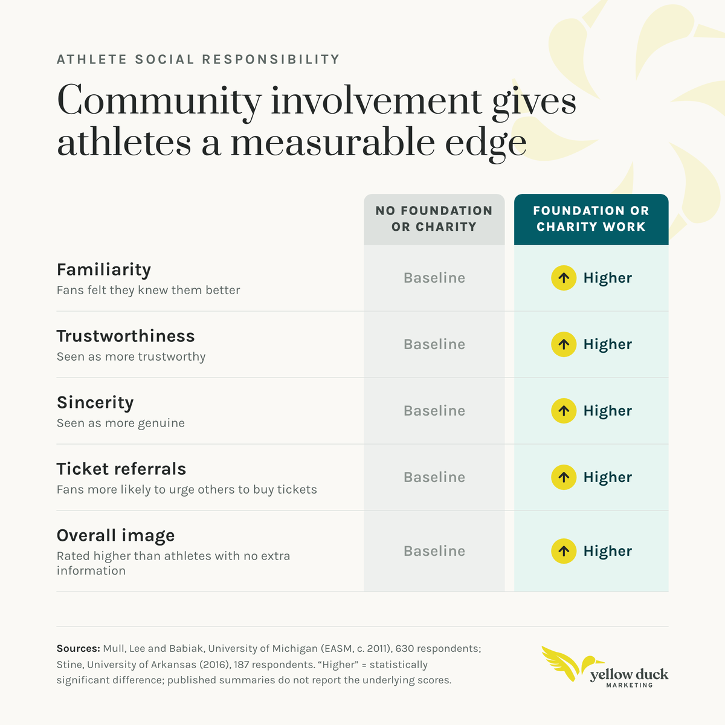
Athletes with foundation or charity work came out ahead on every measure. Sources: Mull, Lee and Babiak; Stine
Fit matters most
Not all giving lands the same way. In the Michigan study, the biggest factor in how people judged an athlete was how well the athlete and the cause matched. It shaped how sincere and trustworthy people found the athlete and what they planned to do next.
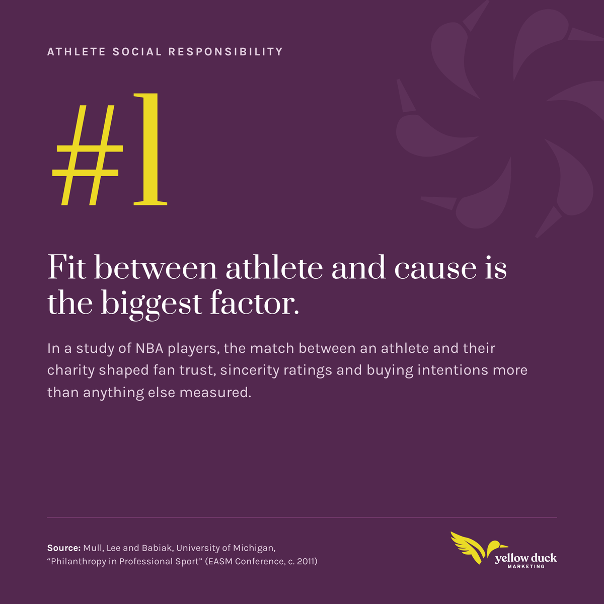
The match between athlete and cause shaped fan opinions more than anything else measured. Source: Mull, Lee and Babiak
Sponsorship research shows the same thing. A study of 310 fans at a pro soccer match in Istanbul found that when a sponsor was a natural fit with the team, fans saw its motives as sincere. That made them feel better about the sponsor and more likely to buy its products.
Motives come into it too. Researchers interviewed athletes, foundation directors, league and team executives and a sports agent about why athletes give. The reasons were mixed: wanting to help, self-interest, their sense of who they are and a feeling that they owe something back. For example, Brandt Bronico of Charlotte FC is embraced as the “Mayor” because of his loyalty to the community, presence at other local charity events and his own fundraiser for Beds for Kids.
Our take: a cause that ties back to an athlete’s own story or hometown is easier for fans to believe than a one-time check written for a photo.
Former athletes and their legacy
A foundation can keep an athlete tied to their community long after they stop playing. Greg Olsen is a good Charlotte example. He started The HEARTest Yard with Levine Children’s Hospital in 2013, a year after his son TJ was born with a rare congenital heart condition. Today it’s a program of Receptions for Research: The Greg Olsen Foundation, which supports families of kids with congenital heart disease with in-home nursing care and other medical services. It’s also about as clear a fit between an athlete and a cause as you’ll find.
We’ve seen the impact up close. When we opened Steak 48 in Charlotte, we suggested a full restaurant buyout benefiting The HEARTest Yard and made the match. The first HEARTest Yard UnGala in 2022 sold out with a waitlist. Steak 48 covered the restaurant, staff, food and drinks, so 100 percent of sponsorships, ticket sales and donations went to the charity. That money helped fund in-home nursing care for 60 heart families. The results have grown year after year and the loyalty keeps building in the community and media. Read the Steak 48 case study.
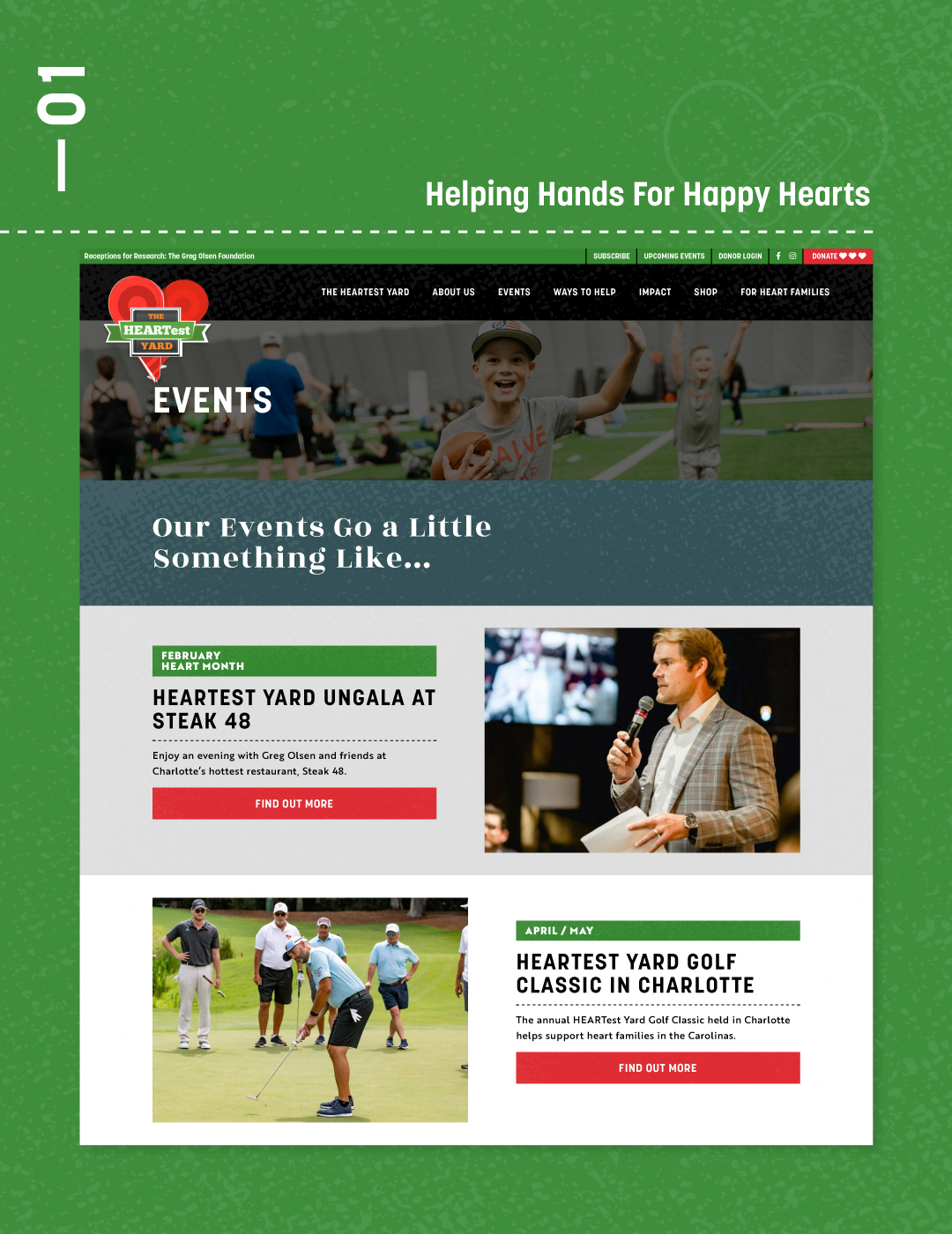
We also designed the foundation’s website and create marketing materials that help them share their mission and impact.
What we’d take away from this
If you’re an athlete, run a foundation or sponsor one, here’s where we’d focus:
- Pick a cause that connects to your story. Fit was the biggest factor in the Michigan study.
- Stick with it. A yearly camp or a long-running partnership gives fans something to remember.
- Keep it local. The people in your community are the ones who see the work up close.
- Tell people about it. Fans can’t factor in work they’ve never heard about.
- Choose partners who fit. A natural match makes it easier for fans to believe everyone’s motives.
Where Yellow Duck comes in
We work with athlete and former athlete foundations on marketing and events. That means helping them tell their stories, reach more people and put on events that connect with their communities.
We’ve spent 15 years doing branding, PR and web work, and we bring all of it to the foundations we work with.
Run an athlete foundation or sponsor one? Let’s talk about getting your good work seen.