
Consumer Behavior, Marketing Strategy
How Nonprofits Are Rebuilding Donor Trust (And the Smart Tactics We’re Seeing Work)
March 14, 2026


In the nonprofit world, trust isn’t a soft metric — it’s the entire engine.
Donors today are more thoughtful about where their money goes than ever before. They’re reading impact reports, researching organizations online and increasingly asking a simple question before they give: “Do I trust this organization to do what it says it will do?”
At Yellow Duck Marketing, we’ve had the privilege of working alongside dozens of nonprofits across the Carolinas and beyond. And lately, we’ve noticed a shift. The organizations building the strongest donor relationships aren’t just telling their story — they’re demonstrating transparency, personalization and accountability in tangible ways.
Here are a few trust-building strategies we’re seeing nonprofits implement particularly well.
Personalization That Shows Donors They Matter
One of the most powerful signals of respect for a donor is personalization.
Organizations are moving beyond generic mailers and email blasts to create communications that acknowledge each donor as an individual partner in the mission.
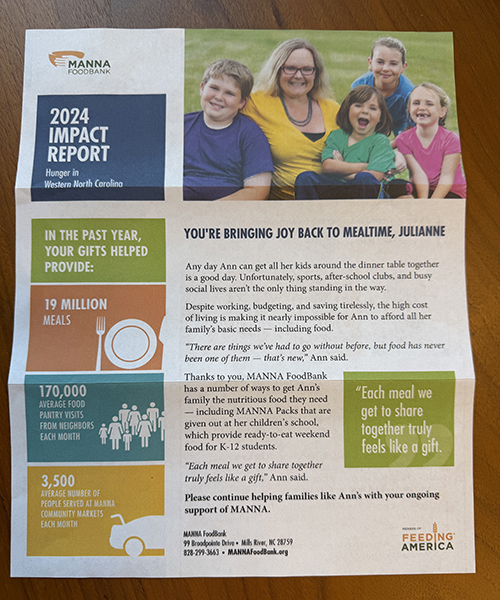
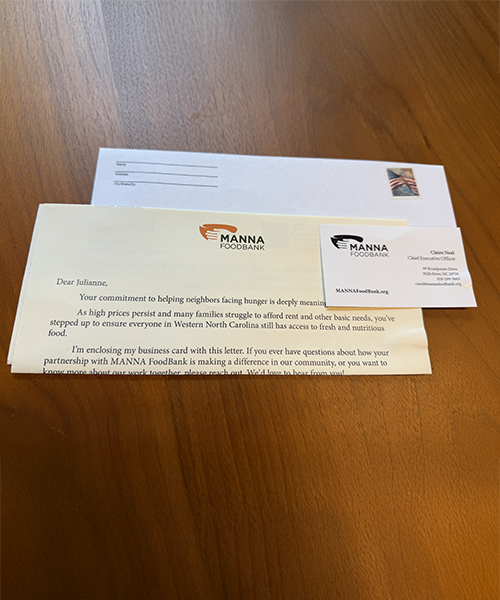
A great example comes from MANNA FoodBank in Asheville, which uses Variable Data Printing (VDP) in their direct mail campaigns to personalize donor communications. Instead of sending identical appeals to thousands of people, the content dynamically changes based on donor history.
A donor might see:
- Their past contribution amount
- The specific program their gift supported
- A message tailored to their giving history
That level of personalization does more than increase response rates. It signals that the organization knows its supporters and values their role in the mission.
In a world of automated marketing, that human touch builds real trust.
Storytelling That Feels Personal, Not Polished
Some of the most powerful trust-building we see isn’t about sophisticated marketing at all. It’s about human storytelling.
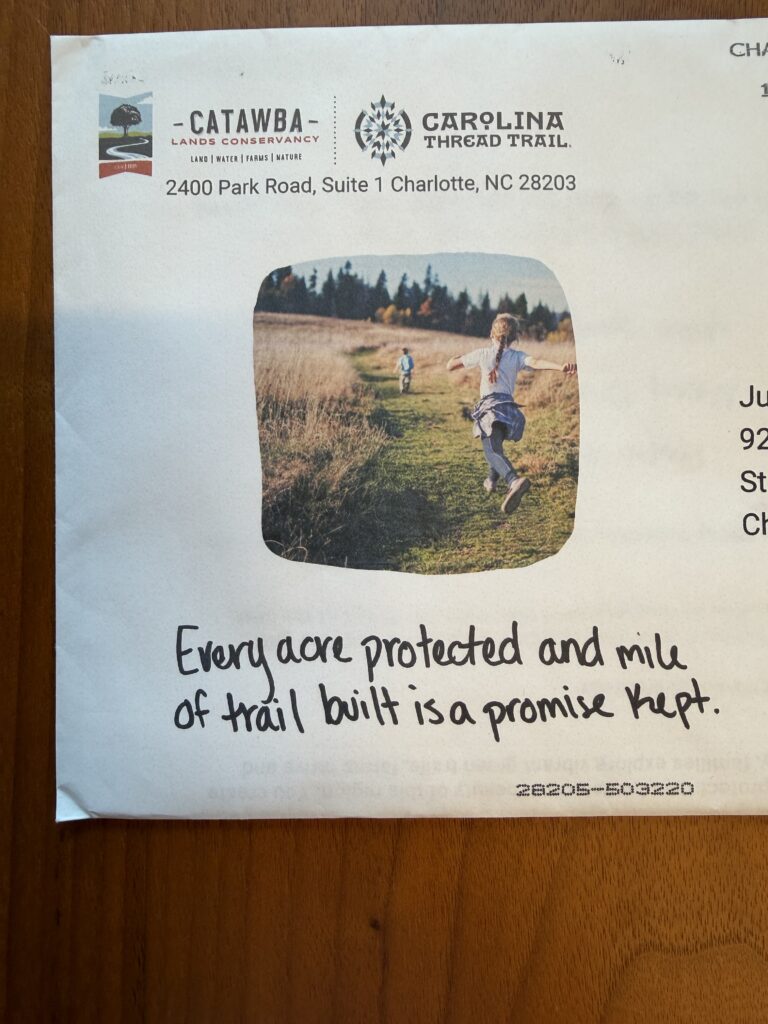
For example, Catawba Lands Conservancy and the Carolina Thread Trail has leaned into personal anecdotes from their Executive Director about growing up exploring nature. Those stories connect the organization’s conservation work to a lived experience, reminding donors that the mission isn’t abstract. It’s rooted in a childhood memory, a trail walked a river explored.
That kind of storytelling brings donors into the why behind the work.
Another standout example is Roof Above in Charlotte. At their True Blessings luncheon, they raised more than $2 million in a single event — not through glitz or elaborate production, but through deeply personal stories from people whose lives were impacted by the organization. I was sitting at the table of a man who was previously homeless and lost his girlfriend to pneumonia.
Even the format reinforced trust. Instead of expensive plated catering, guests received simple boxed lunches, which subtly communicated something powerful: the focus here is the mission, not the spectacle.
Donors can feel the difference. Trust grows when supporters can see the people doing the work.
Nonprofits are increasingly pulling back the curtain to highlight:
- Staff members
- Volunteers
- Beneficiaries
- Community partners
Short videos, Instagram stories and LinkedIn posts that spotlight the real humans behind the mission help donors feel connected to the work.
These moments don’t have to be overly produced. In fact, the authenticity of a phone-shot video or candid photo often performs better than polished campaigns.
Donors want to feel like they’re part of a community, not just a funding source.
Small Gestures That Create Big Connection
Some of the most effective donor engagement tactics we’ve seen are surprisingly analog.
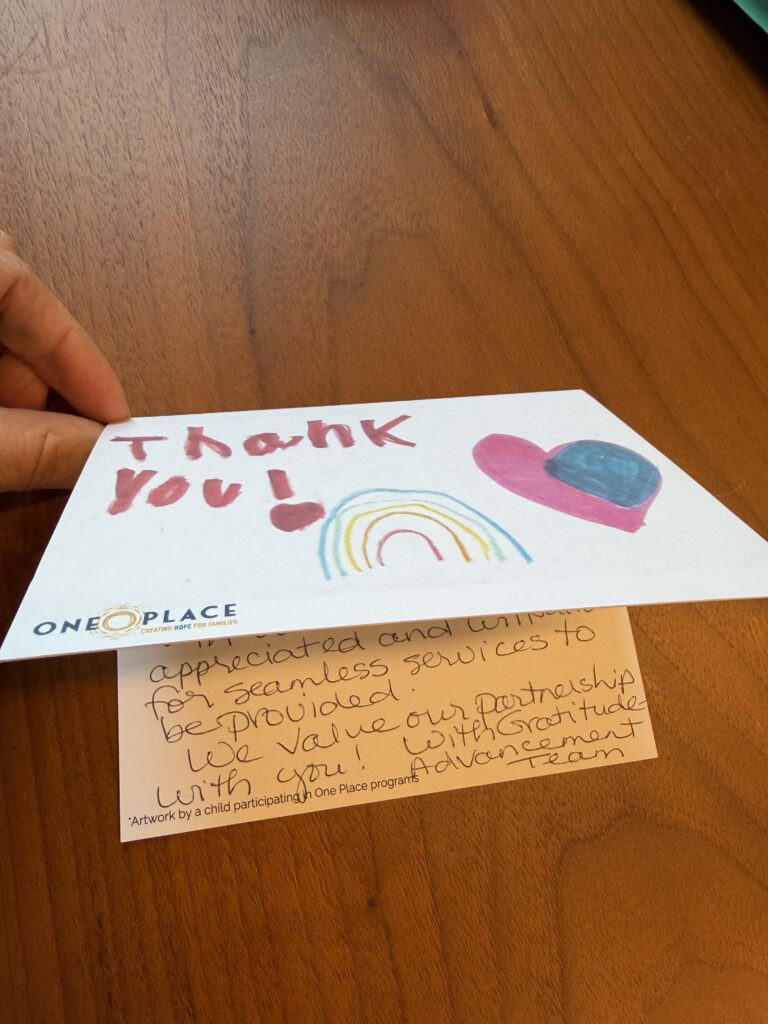
For example, One Place in Onslow County regularly sends handwritten notes to donors. It’s simple, personal, and incredibly memorable in a world of automated emails. Charlotte Ballet has their board members call and reach out to donors.
Similarly, MANNA FoodBank does something subtle but brilliant in their direct mail: they include the CEO’s business card along with the appeal. It immediately humanizes the organization and makes the leadership feel accessible.
It also sends a signal that the organization is confident enough to say, “If you want to talk, here’s how to reach us.” That kind of openness builds credibility.
On the flip side, small missed opportunities can undermine that connection.
I once received a thoughtful handwritten note from a nonprofit thanking us for a donation and saying the Executive Director would love to understand why we chose to support their work. It was a wonderful sentiment — but there was no contact information included, no email, no phone number and no business card.
The intent was perfect. The follow-through just wasn’t there.
Moments like that remind us how important it is to make engagement easy for donors when curiosity or enthusiasm strikes.
Consistent Communication (Not Just When Asking for Money)
The organizations building the deepest donor relationships communicate before, during, and after a gift. Instead of only reaching out during fundraising campaigns, they maintain ongoing engagement through:
- Donor newsletters
- Progress updates
- Impact stories
- Milestone celebrations
- Invitations to see the work firsthand
This approach reframes donors from being a source of funding to being partners in impact. And when donors feel like partners, they stay longer, give more often and advocate for the organization within their own networks.
Radical Transparency About Impact
Donors don’t just want stories anymore — they want proof.
Forward-thinking nonprofits are making their impact data more accessible and understandable. Instead of dense annual reports that get read once a year, organizations are sharing metrics across multiple channels:
- Real-time impact dashboards on websites
- Visual infographics summarizing program results
- Quarterly donor updates
- Transparent breakdowns of how funds are allocated
When organizations openly share both successes and challenges, it builds credibility. Donors recognize honesty and it strengthens long-term relationships. Transparency isn’t just good governance. It’s good marketing.
Trust Is the New Currency
Nonprofits have always relied on trust. But in today’s environment, where donors have more choices and more information than ever, it’s becoming the single most important asset an organization can build.
The nonprofits doing this well aren’t necessarily the largest or best funded. They’re the ones that:
- Personalize communication
- Demonstrate measurable impact
- Tell authentic stories
- Show up where donors are searching
- Nurture relationships over time
When organizations do those things consistently, something powerful happens. Donors stop asking, “Should I give?” and start asking “How else can I help?”
Looking to build donor trust, improve your storytelling and expand your impact? Reach out to us!